Knowledge Hub
-
01/08/2021
A call for greater conceptual clarity in the field of mental health and psychosocial support in humanitarian settings
When the Interagency Standing Committee (IASC) adopted the composite term mental health and psychosocial support (MHPSS) and published its guidelines for MHPSS in emergency settings in 2007, it aimed to build consensus and strengthen coordination among relevant humanitarian actors. The term MHPSS offered an inclusive tent by welcoming the different terminologies, explanatory models and intervention methods of diverse actors across several humanitarian sectors (e.g., health, protection, education, nutrition). Since its introduction, the term has become well-established within the global humanitarian system. However, it has also been critiqued for papering over substantive differences in the intervention priorities and conceptual frameworks that inform the wide range of interventions described as MHPSS. Our aims are to clarify those conceptual frameworks, to argue for their essential complementarity and to illustrate the perils of failing to adequately consider the causal models and theories of change that underlie our interventions.
Read more
-
03/19/2021
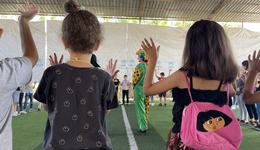
Process evaluation of TeamUp: a movement-based psychosocial intervention for refugee children in the Netherlands
Nearly 60,000 people applied for asylum in the Netherland in 2015, confronting the governmental structures and services with great administrative, logistical and service provision challenges. Refugee children’s psychosocial needs and wellbeing are often overlooked, and post-migration support is of pivotal importance. An easy accessible movement–based psychosocial intervention, called TeamUp, was developed for children aged 6–17 living in refugee reception centres. A mixed-method process evaluation was conducted of (1) implementation process, (2) implementation quality, and (3) perceptions on implementation and outcomes. The intervention was positively perceived by all stakeholders and was found to have a positive impact on children’s psychosocial learning and wellbeing.
Read more
-
07/19/2021
Accuracy of a Proactive Case Detection Tool for Internalizing and Externalizing Problems Among Children and Adolescents
This study evaluates the accuracy of the Community Case Detection Tool (CCDT) in detecting children and adolescents aged 6–18 years with significant mental health care needs in a conflict-affected setting: the occupied Palestinian territory. The CCDT is developed to improve community-based detection and increase help-seeking among children and adolescents in need of mental health care. During this study, teachers and community workers were trained to use the CCDT. Children detected using the tool were invited for a structured clinical interview with a psychologist to test the accuracy of CCDT-based detection. Results show that the CCDT offers a promising low-cost solution to mitigate underdetection of mental health problems in challenging settings.
Read more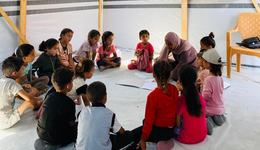
-
10/08/2021
Proactive detection of people in need of mental healthcare: accuracy of the community case detection tool among children, adolescents and families in Sri Lanka
This study evaluates the accuracy of a new tool, the Community Case Detection Tool (CCDT). The CCDT uses illustrated vignettes, two questions and a simple decision algorithm to support proactive community-level detection of children, adolescents and families in need of mental healthcare to improve help-seeking. Trusted and respected community members in the Eastern Province of Sri Lanka used the CCDT in their daily routine. Children and families detected as potentially in need of mental healthcare based on utilizing the CCDT (N = 157, aged 6–18 years) were invited for a clinical interview by a mental health counsellor using the Mini-International Neuropsychiatric Interview for Children and Adolescents (MINI-KID). Results showed 7 out of 10 children and families detected by community members using the CCDT were confirmed to be in need for treatment.
Read more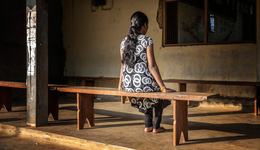
-
05/31/2021
Effectiveness of a technology-assisted, family volunteers delivered, brief, multicomponent parents’ skills training intervention for children with developmental disorders in rural Pakistan: a cluster randomized controlled trial
This study adapted the World Health Organization’s mental health Gap-Intervention Guidelines (mhGAP-IG) developmental disorders module into a tablet-based android application to train caregivers of children with developmental disorders. Through doing so, it aimed to evaluate the effectiveness of this technology-assisted, family volunteers delivered, parents’ skills training intervention to improve functioning in children with developmental disorders in a rural community of Rawalpindi, Pakistan. In the relatively short intervention period of 6 months, no improvement in child functioning was observed; but, there were significant improvements in caregivers’ health related quality of life. Further trials with a longer follow-up are recommended to evaluate the impact of intervention.
Read more
-
12/01/2021
Developing the Group Facilitation Assessment of Competencies Tool for Group-Based Mental Health and Psychosocial Support Interventions in Humanitarian and Low-Resource Settings
In humanitarian settings, mental health and psychosocial support services (MHPSS) are often delivered in group-based formats. Group interventions enable providers to reach more individuals when resources and technical expertise are limited. Group-based programs also foster social support, empathy, and collective problem-solving among the participants. To remedy the current lack of tools available to assess the group facilitation competencies of individuals delivering group-based MHPSS, this paper aims to illustrate the process of developing such a tool. Through this process, the Group Facilitation Assessment of Competencies (GroupACT) Tool is developed. GroupACT is a structured observational tool for assessing these competencies during standardized role-plays with actor clients, or in vivo during the delivery of group sessions with actual clients. The article is concluded with guidance for using the GroupACT to assess facilitators’ competencies in providing group-based MHPSS in the health, education, protection, and other sectors in humanitarian settings.
Read more
-
03/22/2022
Health system governance in settings with conflict-affected populations: a systematic review
Health system governance has been recognized as critical to strengthening healthcare responses in settings with conflict-affected populations. The aim of this review was to examine existing evidence on health system governance in settings with conflict-affected populations globally. The specific objectives were (1) to describe the characteristics of the eligible studies; (2) to describe the principles of health system governance; (3) to examine evidence on barriers and facilitators for stronger health system governance; and (4) to analyse the quality of available evidence. Overall, this review highlights the need for more theoretically informed empirical research on health system governance in settings with conflict-affected populations that draws on existing frameworks for governance.
Read more