Knowledge Hub
-
03/23/2020
The Cultural and Contextual Adaptation Process of an Intervention to Reduce Psychological Distress in Young Adolescents Living in Lebanon
Armed conflict leads to increased risk of emotional distress among children and adolescents, and increased exposure to significant daily stressors such as poverty and community and family violence. Unfortunately, these increased risks usually occur in the context of largely unavailable mental health services. There is growing empirical support that evidence-based treatment techniques can be adapted and delivered by non-specialists with high fidelity and effectiveness. However, in order to improve feasibility, applicability, and outcomes, appropriate cultural and contextual adaptation is essential when delivering in different settings and cultures. This paper reports the adaptation process conducted on a new World Health Organization psychological intervention—Early Adolescent Skills for Emotions (EASE)—for use in the north of Lebanon.
Read more
-
10/24/2016
Assessing the impact of the I-Deal Life Skills Intervention on the psychosocial wellbeing of Syrian refugee children in Lebanon
This study reports on the findings of an evaluation of I-Deal, a life skills intervention aimed at fostering resilience among early adolescent refugees, using a parallel group randomised controlled trial to compare I-Deal to a structured recreational activity group (SRA). 325 adolescents in Akkar, Lebanon, 74% of them Syrian, were randomised to I-Deal or SRA. Ultimately, the findings do not support the effectiveness of I-Deal. Several factors are considered that may help explain the lack of effect, including the aspects of the intervention design, possible measurement error suggested by low reliabilities on several instruments and a ceiling effect on our primary outcome.
Read more
-
08/12/2022
Effectiveness of a brief group behavioural intervention on psychological distress in young adolescent Syrian refugees: A randomised controlled trial
This study evaluated the effectiveness of a nonspecialist delivered group-based intervention (Early Adolescent Skills for Emotions (EASE)) to improve young adolescents’ mental health. In this single-blind, parallel, controlled trial, Syrian refugees aged 10 to 14 years in Jordan were identified through screening of psychological distress as defined by scores ≥15 on the Paediatric Symptom Scale. Participants were randomised to either EASE or enhanced usual care (EUC) involving referral to local psychosocial services (on a 1:1.6 ratio). It found that the intervention led to reduced internalising problems in young refugee adolescents and was associated with reduced distress and less inconsistent disciplinary parenting in caregivers. Overall, this intervention has the potential as a scalable intervention to mitigate young adolescents’ emotional difficulties in low- and middle income countries.
Read more
-
04/18/2022
Family systemic psychosocial support for at-risk adolescents in Lebanon: study protocol for a multi-site randomised controlled trial
This study identifies a scarcity of research on effective approaches for preventing and treating psychological distress in this population, particularly in humanitarian settings. Through the development of a brief family systemic psychosocial support intervention to be delivered through existing child protection systems with non-specialist facilitators, this paper outlines the study protocol for a randomised controlled trial of the intervention in Lebanon.
Read more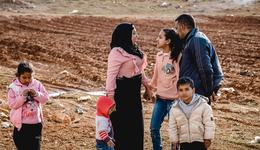
-
03/01/2022
A Proof-of-Concept Study of Can’t Wait to Learn: A Digital Game-Based Learning Program for Out-of-School Children in Lebanon
Evaluations of education technology (ed tech) interventions in humanitarian settings are scarce. This paper present a proof-of-concept study of Can’t Wait to Learn (CTWL), a digital game-based learning program that combines an experiential, active learning design with meaningful, competency-appropriate, and contextually relevant content. Here, the feasibility is assessed using the CWTL program to address the current education gap in Lebanon by implementing its mathematics component in basic literacy and numeracy classes with out-of-school children ages 10-14. Findings support the feasibility of using ed tech programs to meet the needs of out-of-school children, as the study saw significant improvements in numeracy, psychological symptoms, and self-esteem; positive reported experiences with the program; increased motivation among the children; and overall ease of implementation.
Read more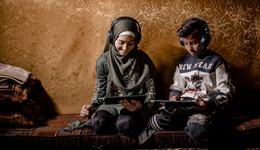
-
07/11/2022
Evaluation of competency-driven training for facilitators delivering a psychological intervention for children in Lebanon: a proof-of-concept study
The mounting evidence for effective delivery of psychological interventions by non-specialists in low- and middle-income settings has led to a rapid expansion of mental health and psychosocial support trainings globally. As such, there is a demand for strategies on how to train and implement these services to attain adequate quality. This study aims to evaluate the added value of a competency-driven approach to training of facilitators for a group intervention for children with severe emotional distress in Lebanon. Overall, it demonstrates the potential of competency-driven training (CDT), using standardised assessment of trainee competencies, to contribute to better training outcomes without extending the duration of training.
Read more
-
04/20/2022
Scalable psychological interventions for Syrian refugees in Europe and the Middle East: STRENGTHS study protocol for a prospective individual participant data meta-analysis
The World Health Organization’s (WHO) scalable psychological interventions, such as Problem Management Plus (PM+) and Step-by-Step (SbS) are designed to be cost-effective non-specialist delivered interventions to reduce symptoms of common mental disorders, such as anxiety, depression and post-traumatic stress disorder (PTSD). The STRENGTHS consortium aims to evaluate the effectiveness, cost-effectiveness and implementation of the individual format of PM+ and its group version (gPM+), as well as of the digital SbS intervention among Syrian refugees in seven countries in Europe and the Middle East. This is a study protocol for a prospective individual participant data (IPD) meta-analysis to evaluate (1) overall effectiveness and cost-effectiveness and (2) treatment moderators of PM+, gPM+ and SbS with Syrian refugees.
Read more