Knowledge Hub
-
01/02/2023
Can't Wait to Learn's Research and Scaling Journey: From Development to Scale-up
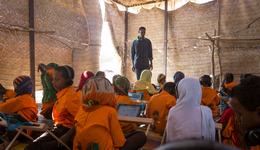
Can't Wait to Learn is a digital game based learning platform for education in emergencies. Since 2012 War Child has conducted research on Can’t Wait to Learn, not only to access its impact on children’s learning and psychosocial well-being, but also to develop and refine the programme and continually monitor and update the game to deliver the best learning outcomes for children. This evidence gives confidence to programme funders and implementers to continue working with Can’t Wait to Learn.
Read more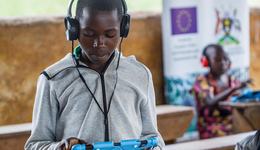
-
01/02/2023
Value for Money Chad Report
In the current climate of protracted crises and forced displacement, there is a growing demand for evidence-based and scalable education programmes. In 2020, War Child Holland was awarded the Global Partnership for Education Knowledge and Innovation Exchange (GPE KIX) global grant to generate knowledge and evidence on how education technology (EdTech) innovations can be adapted and scaled to improve education access and quality for refugee and displaced children in confl ict-aff ected countries. KIX is a joint initiative by the GPE and the International Development Research Centre (IDRC) which aims to connect expertise, innovation and knowledge to strengthen education systems and accelerate progress toward Sustainable Development Goal 4 in GPE partner countries. Our research is taking place in Chad, Sudan and Uganda, centred on War Child’s flagship education programme, Can’t Wait to Learn.
Read more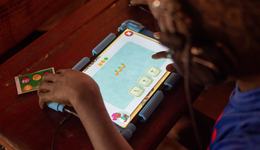
-
06/01/2023
Scaling Education Technology Innovations: A Policy Network Analysis in Sudan
This report presents the results of an Education Technology (EdTech) Policy Network Analysis conducted in Sudan as part of War Child’s research agenda on how to scale up EdTech in countries affected by conflict, funded by the Global Partnership for Education Knowledge and Innovation Exchange (KIX); a joint endeavor of the International Development Research Centre and the Global Partnership for Education. It aims to identify key actors and relationships in the EdTech sector in Sudan to understand how EdTech can be better utilised to accelerate progress towards SDG4, with a particular focus on how EdTech programmes, such as War Child’s Can’t Wait to Learn, can be effectively scaled up. The study consists of three methods: semi-structured interviews with seven key informants in the EdTech sector, an analysis of relevant policy documents, and a social network analysis of relationships between EdTech actors. Data collection was considerably impacted by a military coup and subsequent political instability considerably affected data collection as well as the lives and work of interview respondents, creating general uncertainty about most political processes and priorities, including EdTech.
Read more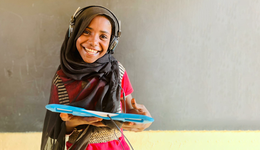
-
06/01/2023
Scaling Education Technology Innovations: A Policy Network Analysis in Chad
This report presents the results of an Education Technology (EdTech) Policy Network Analysis conducted in Chad as part of War Child’s research agenda on how to scale up EdTech in countries affected by conflict, funded by the Global Partnership for Education Knowledge and Innovation Exchange (KIX); a joint endeavor of the International Development Research Centre and the Global Partnership for Education. It aims to identify key actors and relationships in the EdTech sector in Chad to understand how EdTech can be better utilised to accelerate progress towards SDG4, with a particular focus on how EdTech programmes, such as War Child’s Can’t Wait to Learn, can be effectively scaled up. The study consists of three methods: semi-structured interviews with six key informants in the EdTech sector, an analysis of relevant policy documents, and a social network analysis of relationships between EdTech actors.
Read more
-
08/09/2017
Research priority setting for integrated early child development and violence prevention (ECD+) in low and middle income countries: An expert opinion exercise
This study utilized the Child Health and Nutrition Initiative (CHNRI) method for the setting of research priorities in integrated Early Childhood Development and violence prevention programs (ECD+). Through this systematic exercise, the paper provides an important contribution to establishing research agendas in the domain of ECD+.
Read more
-
11/19/2019
Development of the WHO Caregiver Skills Training Program for Developmental Disorders or Delays
Globally, 52.9 million children under the age of 5 experience a developmental disability, such as sensory impairment, intellectual disability, and autism spectrum disorders. Of these 95% live in low-and-middle-income countries. Most of these children lack access to care. In light of the growing evidence that caregivers can learn skills to support their children’s social communication and adaptive behavior and to reduce their challenging behavior, the World Health Organization developed a novel Caregiver Skills Training Program (CST) for families of children with developmental disorders or delay to address such treatment gap. This report outlines the development process, content, and global field-testing strategy of the WHO CST program.
Read more
-
08/17/2020
Can’t Wait to Learn: A quasi-experimental mixed-methods evaluation of a digital game-based learning programme for out-of-school children in Sudan
Innovations are needed to address the global issue of access to high-quality education, particularly in low- and middle-income countries. This paper shows quasi-experimental evidence that a digital game-based learning programme (‘Can’t Wait to Learn’) led to significantly greater improvements in mathematics competency, Arabic literacy competency, and psychological wellbeing of children aged 7–9 in Sudan, compared to state-provided education for out-of-school children, 6 months after the start of the programme implementation (n = 221).
Read more