Knowledge Hub
-
06/24/2023
Effectiveness of the caregiver support intervention on child psychosocial wellbeing among Syrian refugees in Lebanon: Mediation and secondary analysis of a Randomized Controlled Trial
This study evaluates the impact of the nine session Caregiver Support Intervention (CSI) on improving children's wellbeing and examines putative mediators of changes in children's psychosocial wellbeing. 240 female caregivers were randomly allocated (1:1) to the CSI or a waitlist control comparison condition. The study was implemented in Lebanon, in an area characterized by high levels of poverty and a high number of the Syrian refugees. Here, a parallel group Randomized Controlled Trial method reported on caregiver-reported child-level wellbeing. The proportion of the total effect of the CSI intervention on child psychosocial wellbeing mediated by caregiver distress, caregiver wellbeing and harsh parenting was 77%. Overall, the study finds CSI holds potential for down-stream short-term effect on improving children's psychosocial wellbeing, beyond the previously reported positive caregiver outcomes.
Read more
-
08/01/2020
Supporting Syrian families displaced by armed conflict: A pilot randomized controlled trial of the Caregiver Support Intervention
War Child Holland’s Caregiver Support Intervention (CSI) aims to strengthen parenting by lowering stress and improving psychosocial wellbeing among refugee parents, while also increasing knowledge and skill related to positive parenting. The CSI is a nine-session group intervention delivered by non-specialist providers. This paper describes the findings of a two-arm pilot randomized controlled trial (RCT) of the CSI with Syrian refugees in Lebanon. The primary aim was to test the feasibility of our study methodology prior to conducting a definitive RCT.
Read more
-
06/01/2023
Scaling Education Technology Innovations: A Policy Network Case Study in Uganda
This report presents the results of an Education Technology (EdTech) Policy Network Analysis conducted in Uganda as part of War Child’s research agenda on how to scale up EdTech in countries affected by conflict, and is funded by the Global Partnership for Education Knowledge and Innovation Exchange (KIX); a joint endeavor of the International Development Research Centre and the Global Partnership for Education. It aims to identify key actors and relationships in the EdTech sector in Uganda to understand how EdTech can be better utilised to accelerate progress towards SDG4, with a particular focus on how EdTech programmes, such as War Child’s Can’t Wait to Learn, can be effectively scaled up. The study consists of three methods: semi-structured interviews with six key informants in the EdTech sector, an analysis of relevant policy documents, and a social network analysis of relationships between EdTech actors.
Read more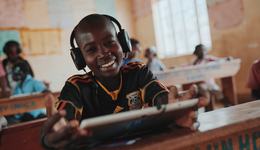
-
01/02/2024
Can't Wait to Learn Qualitative Evaluation in Uganda
In the current climate of protracted crises and forced displacement, there is a growing demand for evidence-based and scalable education programmes. In 2020, War Child Alliance (WCA) was awarded a Global Partnership for Education Knowledge and Innovation Exchange (GPE KIX) global grant to generate knowledge and evidence on how education technology (EdTech) innovations can be adapted and scaled to improve education access and quality for refugee and displaced children in conflict-affected countries. KIX is a joint initiative by the GPE and the International Development Research Centre (IDRC) which aims to connect expertise, innovation, and knowledge to strengthen education systems and accelerate progress toward Sustainable Development Goal 4 in GPE partner countries. Our research (2020-2024) has taken place in Chad, Sudan and Uganda, centered on War Child’s flagship education programme, Can’t Wait to Learn.
Read more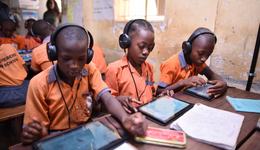
-
02/22/2021
Assessment of service provider competency for child and adolescent psychological treatments and psychosocial services in global mental health: evaluation of feasibility and reliability of the WeACT tool in Gaza, Palestine
This study identifies a scarcity of evaluated tools to assess whether non-specialist providers achieve minimum levels of competency to effectively and safely deliver psychological interventions in low- and middle-income countries. The objective of this study was to evaluate the reliability and utility of the newly developed Working with children – Assessment of Competencies Tool (WeACT) to assess service providers’ competencies in Gaza, Palestine. It evaluated; (1) psychometric properties of the WeACT based on observed role-plays by trainers/supervisors; (2) sensitivity to change among service provider competencies using pre-and-post training WeACT scores on standardized role-plays; (3) in-service competencies among experienced service providers using standardized role-plays.
Read more
-
05/01/2024
Psychological and Social Suffering of Another Generation of Palestinian Children Living Under Occupation: An Urgent Call to Advocate
Read more
-
01/01/2024
Scaling Education Innovations: Findings from Multi-Country Research on the Adaptation and Scale-Up of Can't Wait to Learn in Low-Resource and Fragile Settings
WCA’s multi-year global research programme, “Bridges to impact through innovative educational technology: Forging links between policy, research, and practice”, supported by the Global Partnership for Education Knowledge and Innovation Exchange (GPE KIX), is designed to address the evidence gap on how to effectively adapt and scale up EdTech solutions in conflict-affected and low-resource settings. Implemented in Uganda, Chad, and Sudan between 2020 and 2024, with a focus on Can’t Wait to Learn, the research investigated the effectiveness, cost-effectiveness, and conditions required for successful adoption and scaling of EdTech solutions in low-resource and fragile contexts. Also, through the project, a complementary programme – SchoolLinks – was developed. SchoolLinks aims to increase children’s access, attendance, and retention in school by strengthening caregivers’ engagement in children’s education and the home-school relationship. It is designed to increase the cost-efficiency of Can’t Wait to Learn and other education initiatives, thus supporting their scalability. Through this research, WCA also generated valuable knowledge on government adoption of EdTech solutions, providing insights into the processes and conditions that facilitate successful integration of programmes like Can’t Wait to Learn into national education systems.
Read more