Knowledge Hub
-
12/04/2023
Systematic review of strategies for improving attendance in health and mental health interventions for children and adolescents in LMICs: Implications for mental health interventions
This review synthesises the evidence base for promoting and maintaining attendance in mental health and health interventions for children and adolescents in low- and middle-income countries (LMIC) and identifies strategies that can be employed for mental health interventions in those contexts. This is achieved through systematically searching relevant peer-reviewed literature in PubMed, Embase, PsychINFO and Global Health. The findings identify several promising strategies from the global health literature, which can be translated to mental health interventions for children and adolescents in LMICs. Still, they also highlight the need for further research to establish their appropriateness in addressing the barriers to attendance in mental health interventions.
Read more
-
03/27/2024
Social contact as a strategy to reduce stigma in low- and middle-income countries: A systematic review and expert perspectives
Social contact (SC) has been identified as a promising strategy for stigma reduction. Different types of SC exist. Various scholars defined positive factors to strengthen SC. This systematic review aims to investigate the application and effectiveness of SC as a strategy to reduce stigmatisation across stigmas, settings and populations in low- and middle-income countries (LMICs). More specifically, it examines the use of positive factors. It finds that conclusions about which type of SC is more effective or whether SC is more effective for a specific stigma category cannot be drawn; rather, it recommends future research to strengthen reporting on effectiveness as well as people with lived experience (PWLE) perspective and SC processes, and to further critically examine the potential of SC. An overview of positive factors applied to strengthen SC is provided, which can stimulate reflection and guide future SC.
Read more
-
06/03/2024
Perspectives on competency-based feedback for training non-specialists to deliver psychological interventions: multi-site qualitative study of the EQUIP competency-based approach
The use of feedback to address gaps and reinforce skills is a key component of successful competency-based mental health and psychosocial support intervention training approaches. Competency-based feedback during training and supervision for personnel delivering psychological interventions is vital for safe and effective care. For non-specialists trained in low-resource settings, there is a lack of standardised feedback systems. This study explores perspectives on competency-based feedback, using structured role-plays that are featured on the Ensuring Quality in Psychosocial and Mental Health Care (EQUIP) platform developed by the World Health Organization and United Nations Children’s Fund.
Read more
-
02/03/2025
Evaluating care quality and appropriateness when promoting health-care seeking for children – Authors' reply
The authors reply responding to comments and concerns relating to evaluating the effectiveness of the Community Case Detection Tool (CCDT) to promote mental health help-seeking among children in refugee settlements across Uganda
Read more
-
12/20/2024
Data-driven supervision to optimize the effectiveness of proactive case detection for mental health care among children: a proof-of-concept study
This proof-of-concept study evaluated an optimization strategy for the Community Case Detection Tool (CCDT) aimed at improving community-level mental health detection and help-seeking among children aged 6–18 years. The optimization strategy, CCDT+, combined data-driven supervision with motivational interviewing techniques and behavioural nudges for community gatekeepers using the CCDT.
Read more
-
12/20/2024
Applying systems theory to global mental health
In recent years the evidence base for psychological interventions in low- and -middle-income countries (LMIC) has rapidly accrued, demonstrating that task-shifting models result in desired outcomes. Next, it is important to look at how this evidence translates into practice. In doing so, this paper argues that the field of global mental health might benefit from applying a system theory or system science perspective.
Read more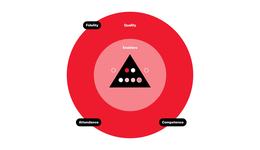
-
01/01/2025
Competency-based training and supervision: development of the WHO-UNICEF Ensuring Quality in Psychosocial and Mental Health Care (EQUIP) initiative
Globally, there has not been a standardised approach to ensure that the growing number of people who are not licensed clinicians but are delivering psychological interventions and mental health services have the competencies to deliver those interventions and services safely. Therefore, WHO and UNICEF developed Ensuring Quality in Psychosocial and Mental Health Care (EQUIP). EQUIP is a free resource with a digital platform that can be used to guide competency assessment. This paper describes EQUIP's 5-year development (2018–23) and the rationale supporting its contents and use.
Read more