Why should we care about the invisible wounds of affected people in humanitarian emergencies?
Sept. 2, 2026
Tiina Vahtras, Senior Advocacy Advisor
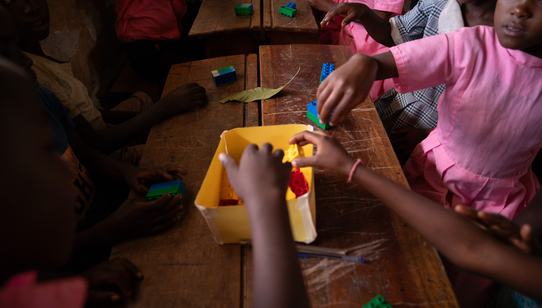
People affected by conflict, displacement, or violence, often experience intense psychological distress with immediate and potentially lasting effects on their emotional wellbeing, social relationships, and ability to function in daily life. Children and young people are particularly vulnerable, as exposure to traumatic events can disrupt their development, with lasting consequences into adulthood. People with pre-existing and severe mental health conditions are also at heightened risk as medication, care, and protection systems may no longer be available to them. These impacts extend beyond individuals. Prolonged distress, and untreated trauma can affect families and communities across generations, undermining social cohesion, economic development, and prospects for peace.
Mental health and psychosocial support as a critical component of life-saving humanitarian response
Humanitarian emergencies undermine the social and emotional foundations that allow individuals and communities to cope and recover. Families may “Community-based approaches are particularly important in humanitarian emergencies, as they underpin the restoration of social connections and local coping capacity” be separated, support networks disrupted, and communities fractured. In humanitarian settings, overwhelming stress and trauma can lead to harmful coping mechanisms, family breakdown, social isolation, and increased protection risks for women, children and adolescents.
MHPSS is delivered through layers of support ranging from safe and dignified basic services and community based interventions to focused psychosocial support and specialised mental health care for people with severe mental health conditions. Integrating MHPSS into humanitarian action is essential alongside the provision of food, shelter, healthcare, and protection.
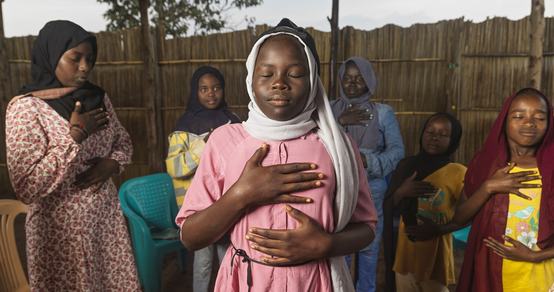
In humanitarian settings, MHPSS encompasses a wide range of interventions including community-based psychosocial support, safe spaces for women, children and caregivers, peer and family support networks, psychological first aid, structured group activities, caregiver and teacher support programmes, outreach and referral systems, and access to specialised mental health services for people experiencing severe distress. Community-based approaches are particularly important in humanitarian emergencies, as they underpin the restoration of social connections and local coping capacity, helping to reduce isolation while fostering inclusion and collective recovery. When delivered in culturally appropriate and inclusive ways, MHPSS interventions contribute to stronger, safer, and more resilient communities.
In humanitarian emergencies, access to MHPSS interventions is essential for restoring a sense of agency, dignity, stability, and hope among affected people and communities. By supporting individuals in processing distress and rebuilding confidence, these interventions help strengthen resilience and reconnect people with their social environment. This, in turn, enables them to re-engage in education, livelihoods, and community life. At the same time, MHPSS contributes to reducing the risk of violence, abuse, neglect, self harm, substance misuse, and suicide. In contexts where formal protection systems break down, are weakened or overwhelmed, MHPSS services are frequently one of the few accessible forms of support available to vulnerable people. Strengthening these services is therefore critical not only for mental wellbeing, but also for survival, protection, and long-term recovery.
A growing mental health crisis exacerbated by funding cuts
The need for MHPSS has become increasingly urgent as the global mental health crisis deepens. Globally, one in eight people lives with a mental health condition such as depression, anxiety, or post-traumatic stress disorder, while among adolescents aged 10–19 the rate rises to one in seven1. In conflict-affected settings, the burden is significantly greater, with an estimated one in five people experiencing mental health conditions2.
Despite the scale of the need, mental health remains chronically underfunded. Even before recent aid cuts, governments allocated on average only around 2% of health budgets to mental health, with only a small proportion reaching the most vulnerable groups, including children and adolescents3. International funding has reflected a similar pattern. Child and family MHPSS has long been deprioritised, receiving only a fraction of overall aid. In 2019, just 0.31% of official development assistance and 1% of private development finance was directed toward these services4.
Recent reductions in humanitarian funding have pushed an already fragile MHPSS system into crisis. In 2025, a survey covering 131 programmes across 32 countries found that approximately 750,000 people, around three-quarters of beneficiaries, immediately lost access to mental health care5. Furthermore, the same survey found that nearly three-quarters of mental health staff reportedly lost their jobs, 75% of people receiving treatment lost access to essential medication, and many child protection programmes identified MHPSS and group-based activities for child, family and community wellbeing as among the most affected interventions.
The impact extends far beyond the closure of individual services. Aid cuts are disrupting entire MHPSS systems, including referral pathways, outreach activities, supervision structures, and community-based support networks that are essential for identifying and supporting vulnerable people. Many programmes are also losing trained MHPSS staff and local expertise that have been built and invested in over several years, weakening the long-term capacity of communities and national systems to respond to mental health needs. It is important to recognise that effective MHPSS interventions build on existing community resources, cultural practices, and local support systems, while simultaneously strengthening national and community capacities to ensure support can be sustained beyond the emergency phase.
Impacts on children and adolescents are particularly severe
The consequences for children are immediate and long-lasting. Already facing conflict, displacement, and instability, many children are left to cope with severe psychological distress without adequate support. Prolonged exposure to adversity, violence, and uncertainty can lead to toxic stress — a sustained and overwhelming activation of the stress response system that can disrupt healthy brain development and negatively affect children’s cognitive, emotional, and social development. Without protective relationships and appropriate support, toxic stress can impair learning, memory, emotional regulation, and physical health, with impacts that may continue into adulthood.
Trauma and psychological distress can profoundly disrupt children’s ability to engage with their daily environments, affecting how they learn, relate to others, and take part in activities that are critical for healthy development. Over time, these challenges can weaken recovery and resilience, ultimately shaping future opportunities and increasing the likelihood of long-term mental health difficulties, social exclusion, and poverty.
Caregiver mental health is equally critical to child wellbeing and protection outcomes. Parents and caregivers experiencing high levels of stress may struggle to provide consistent care, emotional support, and protection for children during crises. Improving caregiver wellbeing contributes directly to children’s safety, development, and recovery by creating more stable and nurturing environments, thereby lowering the risks of neglect, violence, and harmful coping behaviours.
Community-based psychosocial support reinforces these protective effects by easing family stress and fostering healthier relationships and coping patterns. In doing so, it contributes to stronger child protection outcomes, including reduced exposure to violence, exploitation, and harmful practices. Access to trusted adults and supportive environments helps provide children and young people with a sense of stability, safety, and belonging, reducing their likelihood of engaging in harmful or high-risk behaviours. Where adequate MHPSS services are lacking, however, vulnerabilities to violence, exploitation, and other harmful practices increase. These effects extend beyond individuals, undermining social cohesion, resilience, and the long-term stability of communities affected by crisis.
Mental health and psychosocial support are critical components of humanitarian response and recovery, as well as across the humanitarian-development-peace nexus. Mental health needs are rising rapidly - especially in conflict-affected settings - while funding and services continue to decline. Without urgent and sustained investment in integrated and community-based MHPSS, millions of children, families and communities will be left to cope with invisible wounds alone. The consequences will be long-lasting, affecting not only individual wellbeing but also social cohesion, recovery, economic prospects, and the stability of societies for generations to come. MHPSS should therefore be integrated into humanitarian response and recovery, and across humanitarian–development-peace nexus, at the outset and not treated as a secondary need or a luxury. Failure to do so risks reversing years of progress and leaving millions of children, families, and communities without the support needed to recover, adapt, and thrive.